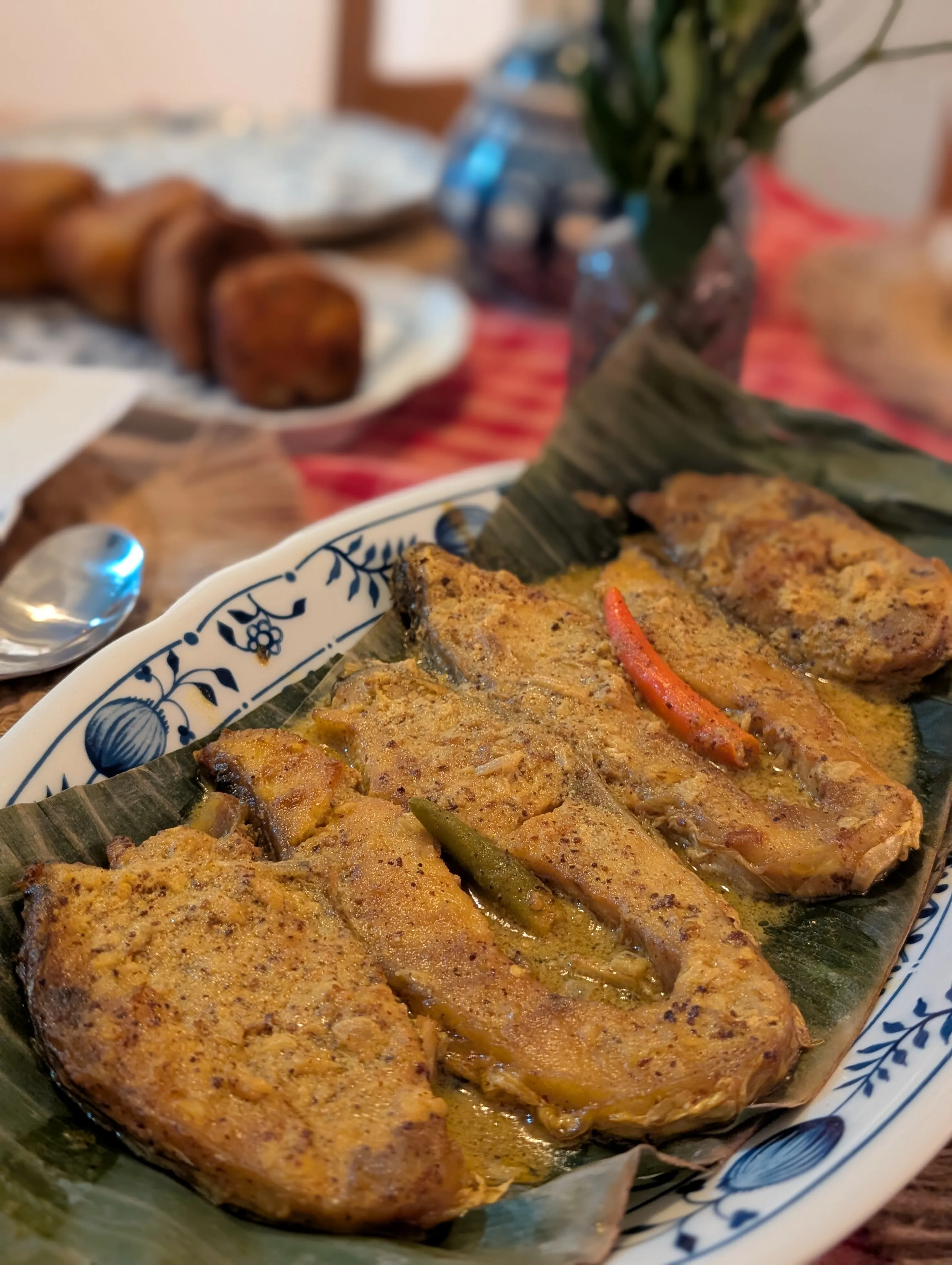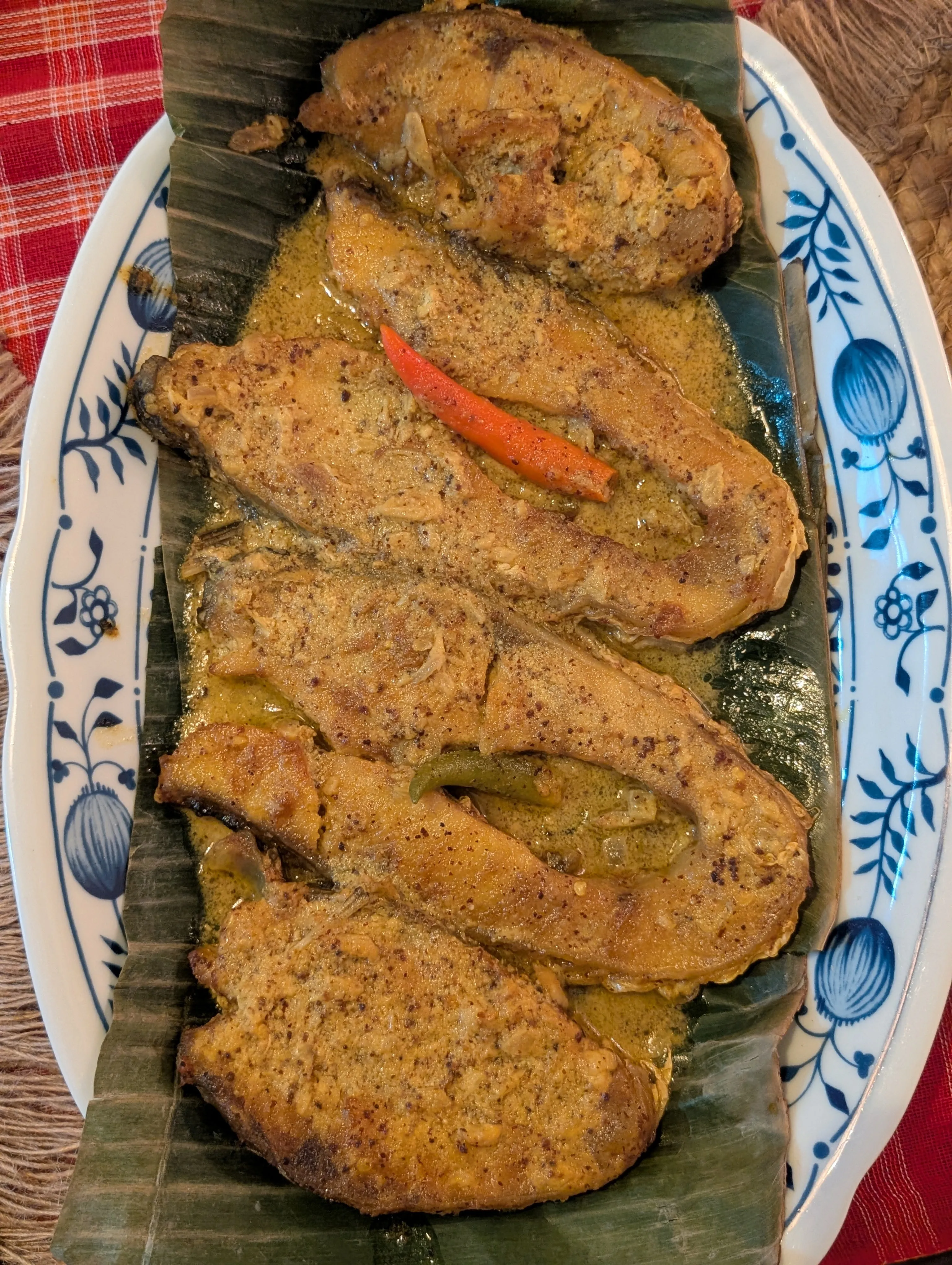
শর্ষে ইলিশ
Shorshe Ilish
Hilsa in mustard sauce
Shorshe Ilish - Hilsa in Mustard
If there’s one dish that defines Bengali cuisine, it’s Shorshe Ilish. Hilsa fish in a sharp mustard sauce—simple in concept, exacting in execution.
The Hilsa Season
Hilsa (Tenualosa ilisha) is a silvery, oily fish that migrates from the Bay of Bengal into rivers during monsoon months (roughly July to October). This is when Bengali households come alive with anticipation. The fish is prized for its rich, almost buttery flesh and its delicate flavor that pairs perfectly with mustard.
Fresh hilsa is expensive and considered a delicacy. When it appears in markets, it’s an event.
Mustard as Foundation
The sauce—shorshe—is what makes this dish distinctly Bengali. Yellow and black mustard seeds are soaked, then ground to a smooth paste with green chilies and a bit of water. This creates a pungent, sharp sauce that cuts through the richness of the oily fish.
The balance is crucial: too much mustard overwhelms the fish, too little and you lose the character of the dish. The mustard should be assertive but not aggressive.
Cooking Technique
The fish is usually cooked in minimal liquid—just enough to create a sauce. Mustard oil is heated until it smokes slightly (mellowing its raw bite), then the mustard paste is added with turmeric, salt, and green chilies. The fish pieces go in carefully, are spooned with the sauce, and left to simmer gently.
Overcooking hilsa is a cardinal sin—the fish should remain moist and flaky, not dry or mealy.
At the Table
Shorshe Ilish is traditionally served with plain steamed rice. Nothing else is needed. The combination of the fish’s richness, the mustard’s sharpness, and plain rice is complete.
This dish appears at celebrations and special occasions. Serving it to guests is a mark of respect and hospitality.
This dish is seasonal and depends on the availability of quality hilsa. Naturally gluten-free.